
China Dual-Use Export Controls in 2026: A Compliance Checklist
If your China entity exports goods, technology or technical services, export control is now a standing compliance function rather than a legal footnote.
August 7, 2026 · 13 min read
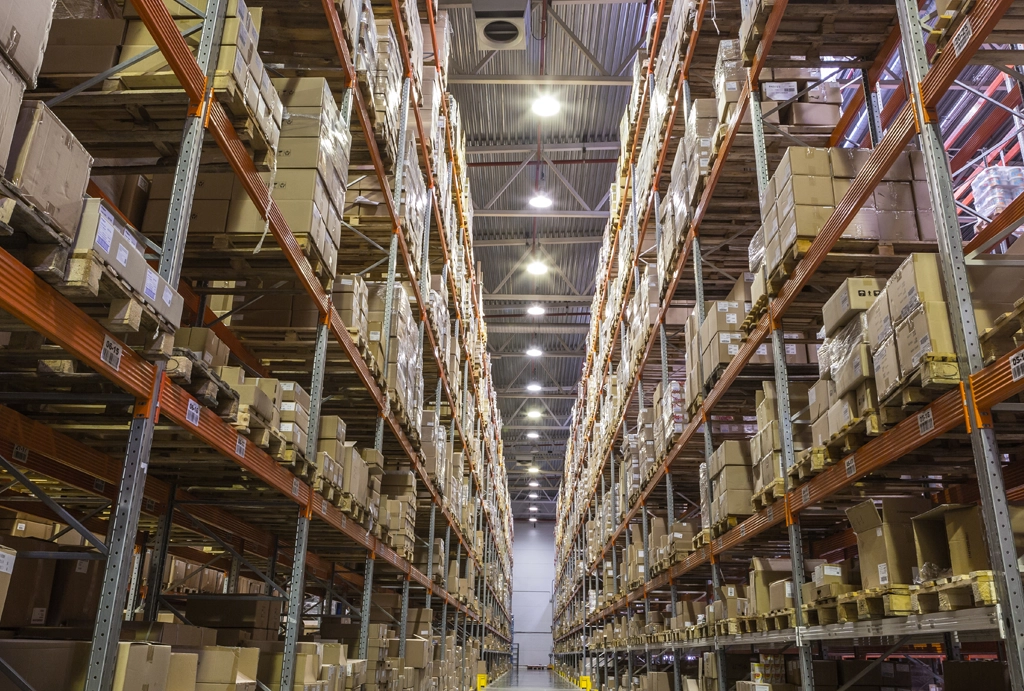
If your China entity ships goods, technology or technical services out of the country, export control is now a standing compliance function rather than an occasional legal question.
China's Regulation on the Export Control of Dual-Use Items took effect on 1 December 2024, consolidating a previously fragmented set of rules into a single licensing framework built on the 2020 Export Control Law. The 2026 Dual-Use Items and Technologies Import and Export Licence Management Catalogue, issued as MOFCOM and GACC Announcement 2025 No. 91 and effective 1 January 2026, expanded the controlled scope again.
Many foreign manufacturers still treat this as a matter for defence contractors and semiconductor firms. That reading is too narrow. The controlled list now reaches into materials, chemicals and production know-how used across mainstream industrial supply chains.
What a dual-use item is
The Regulation defines dual-use items as goods, technologies and services that have both civilian and military applications, or that can otherwise contribute to military potential. Three features of that definition catch companies out.
First, it covers technology and services, not only physical goods. Sending production know-how, design files or technical support to an overseas affiliate can be an export.
Second, intra-group transfers count. Shipping a controlled component from your China plant to your parent company is an export, and internal transfers frequently escape the attention of teams focused on third-party sales.
Third, the framework has extraterritorial reach and includes a list of concerned entities. Importers and end users who do not cooperate with regulatory requirements can be listed and cut off from licences, which makes counterparty conduct your problem as well as theirs.
What the 2026 catalogue added
The 2026 edition of the licence catalogue is materially broader than the 2025 version, adding roughly eighty to eighty-five controlled lines and taking the export side past eleven hundred entries.
Notable additions span several strategic sectors. Additional drug precursor chemicals, including piperidone and fentanyl-related derivatives. Heavy tungsten-nickel alloys. Missile-relevant molybdenum powder and solid tungsten. Samarium and other medium and heavy rare earth materials. Indium-based semiconductor materials. A new category covering bismuth and tellurium materials used in infrared, thermoelectric and radiation detection applications. Corresponding technology control entries extend the reach to production know-how, not just the material itself.
The preamble also shifted its legal basis to reference the consolidated PRC Dual-Use Items Export Control List rather than a specific earlier inter-agency announcement, signalling a more institutionalised regime. Earlier restrictions on gallium, germanium, antimony, graphite and high-performance drones were folded into the same unified list.
The practical message is that a product classification carried out in 2024 may be out of date. This list is reviewed and expanded regularly, and the burden of tracking it sits with the exporter.
How the licensing regime works
Under the consolidated framework, exporters no longer need to register as a dual-use export operator in advance. They apply directly for the export licence.
Applications require documentation on the end user and the intended end use of the item. Licences come in single and general forms, with single licences valid for up to one year and general licences for up to three. Exports must stay within the scope, conditions and validity period stated on the licence, and exporters are required to report actual details of what was shipped, including transport, installation and usage information.
One obligation deserves particular attention. If the end user or the intended use changes, the exporter must immediately halt exports, report the change to the authorities and go through fresh verification. A change of end user is not a paperwork update to be handled at the next renewal.
MOFCOM also retains the ability to impose temporary controls on items outside the list, for up to two years at a time, and to prohibit specified exports or exports to specified destinations, organisations or individuals.
Running a classification exercise
Classification is the foundation of everything else, and it is where most foreign-invested companies are weakest. The common failure is to classify at the level of the finished product. Control entries are written around materials, chemical identities and technical parameters, so a finished machine may be uncontrolled while three components inside it are not.
Start from the bill of materials
Take the bill of materials for each product line you export from China and work down to the level at which you can identify materials and specifications. For each line, record the material composition, the technical parameters that control entries tend to key on such as purity, particle size, alloy content and performance thresholds, the customs commodity code, and the supplier.
Then check each line against the consolidated Dual-Use Items Export Control List and the current catalogue. Three outcomes are possible: clearly controlled, clearly not controlled, or uncertain. The third category is the one that matters, and it should never be left unresolved. Uncertain classifications resolve either through a technical assessment documented in writing or through consultation with the authorities.
Do not stop at the components
Extend the exercise to three further categories that bills of materials do not capture. Production equipment, where the machine your plant uses may itself be controlled if it is relocated or sold. Consumables and process materials used in manufacturing. And the technology associated with any controlled item, since the 2026 catalogue pairs many material entries with corresponding technology controls.
Document the conclusion
A classification is only useful if it can be evidenced later. For each product line, keep a written determination stating the item, the parameters relied on, the control entry checked, the conclusion, the date and the person responsible. When an enforcement question arises two years later, this record is the difference between a documented good-faith determination and an unexplained shipment.
The licence application file
Licence applications turn on end user and end use documentation, and incomplete files are the usual cause of delay.
End user certificate. A statement from the end user identifying itself, the item, the intended use and, generally, an undertaking not to divert the item to prohibited uses or transfer it onward without consent. For intra-group shipments the end user is often your own affiliate, which feels administratively odd but is required all the same.
End use description. Specific and technically credible. "Industrial use" is not a description. What the item does, in what process, producing what output.
Contract and commercial documentation. The sales contract or intra-group agreement, purchase order and shipping details supporting the quantities and destinations applied for.
Technical specification. Documentation supporting the classification, including the parameters relevant to the control entry.
Corporate documentation. Your entity's business licence and evidence of the signatory's authority.
Single versus general licences
A single licence covers a defined transaction and runs for up to a year. A general licence covers repeated exports over up to three years and suits established flows to known affiliates or long-standing customers. The trade-off is that general licences carry heavier internal control and reporting expectations, since the authorities are relying on your systems rather than reviewing each shipment. A company without a functioning internal compliance programme is usually better served applying for single licences until that programme exists.
Deemed exports and technical support
The exposure that most often goes unmanaged has nothing to do with shipping containers.
Controlled technology can leave China through entirely ordinary business activity. An engineer in Shanghai sharing a process specification on a group video call. Design files uploaded to a parent company server hosted overseas. A visiting colleague from headquarters touring the plant and receiving a technical briefing. A local engineer providing remote troubleshooting to an overseas facility. Source code committed to a repository outside China. A Chinese team member seconded abroad carrying know-how in their head and on their laptop.
Each of these can constitute a transfer of controlled technology, and none of them passes through logistics, customs or any function that would think to check. The controls that work here are practical rather than legal: identifying which technical documentation relates to controlled items, marking it, restricting access on the shared systems where it sits, and briefing the engineering team that technical support to overseas colleagues is a regulated activity when it touches controlled technology.
Groups running global engineering teams on shared platforms should treat access control as an export control measure. If an overseas colleague can open a controlled design file at will, the transfer has effectively already happened.
Counterparty screening and the list of concerned entities
The regime places a real diligence burden on exporters, and the list of concerned entities is the mechanism.
Importers and end users that refuse to cooperate with verification, divert items or otherwise breach undertakings can be listed, after which exports to them require special treatment or are prohibited. The consequence for you is that a counterparty's conduct can terminate your ability to supply them, sometimes at short notice and in the middle of a contract.
Practical screening means checking new counterparties against the list before accepting an order, rescreening existing counterparties periodically rather than once at onboarding, and paying attention to the diligence signals that suggest diversion risk: a purchaser whose stated business does not plausibly consume the volumes ordered, requests to ship to a third country unrelated to the buyer, reluctance to provide end use detail, or unusual insistence on particular technical specifications.
Contractual protection matters too. Supply agreements should include end use undertakings, a prohibition on onward transfer without consent, a right to audit or verify, and a suspension right allowing you to stop shipments where a licence condition can no longer be satisfied. Without that last provision, an export control problem becomes a breach of contract claim.
A compliance checklist for foreign manufacturers
1. Classify your product portfolio against the current list. Every item you export from China needs to be checked against the consolidated Dual-Use Items Export Control List and the current year's licence catalogue. Do this at the level of materials and components, not finished product categories, because control entries are written around materials, specifications and technical parameters.
2. Include technology and services in scope. Map the technical data, drawings, software and engineering support that leave China, including to your own group. Treat each flow as a potential export.
3. Screen counterparties and end uses. Build end user and end use screening into your order acceptance process, and check the list of concerned entities. Keep the records, because verification requests arrive after the fact.
4. Assign ownership. Name a person in the China entity responsible for export classification and licence applications. In most foreign-invested companies this function drifts between logistics, sales and finance, which means nobody owns it.
5. Match licences to your shipping reality. Confirm that licence scope, quantities, destinations and validity periods reflect the way you actually ship, then diary renewals well ahead of expiry.
6. Build a change trigger. Put a control in place so that a change of end user or end use stops shipments and escalates for re-verification, rather than being processed as a routine order amendment.
7. Fulfil reporting obligations. Keep the post-export reporting on transport, installation and usage current. This is an ongoing duty, not a one-time filing.
8. Re-review annually. The catalogue is updated. Set an annual classification review keyed to the new year edition, and a faster check when temporary controls are announced.
A worked example
Consider a European industrial group with a plant in Jiangsu producing specialised pumps and valves, exporting roughly a third of output to affiliates in Europe and Southeast Asia and selling the rest domestically. The company's view has always been that export control does not apply to it.
A classification exercise finds three issues. A tungsten-nickel alloy component used in one high-specification valve line falls within a control entry added in the 2026 catalogue. The associated manufacturing specification for that component is separately controlled as technology. And a coating process material used across several lines sits in the uncertain category and needs technical assessment.
The consequences ripple outward. Exports of the affected valve line to the European affiliate now require a licence, which means an end user certificate from a sister company that has never provided one and a lead time the sales team has not built into delivery commitments. The manufacturing specification sits on a group engineering platform accessible from four countries, so access needs restricting. The intra-group pricing of the affected line involves an intangible technology element that the group's transfer pricing documentation does not currently address. And the uncertain coating material blocks a planned shipment until resolved.
None of this stops the business. What it does is add a licensing step to a supply chain that assumed there was none, and it is far cheaper discovered in a classification review than at a port with a customer waiting.
Penalties and voluntary disclosure
The framework carries meaningful consequences, and they are not confined to fines on the company.
Exporting controlled items without a licence, exceeding licence scope, obtaining a licence through false documentation or failing to halt shipments on a change of end user can attract confiscation of goods and proceeds, monetary penalties calculated by reference to turnover from the transactions concerned, suspension or revocation of export privileges, and personal liability for responsible individuals. Serious cases carry criminal exposure. Companies and individuals can also find themselves recorded in the credit system, which affects licence applications and customs treatment more broadly.
For a foreign-invested enterprise there is an additional dimension. A Chinese export control breach frequently triggers reporting obligations to the parent company's own regulators and auditors, and in some jurisdictions to authorities administering that country's own export control or sanctions regimes. A single unlicensed shipment can therefore generate parallel processes on two continents.
If you find a problem
Companies conducting a first proper classification review often discover historic shipments that should have been licensed. The instinct to say nothing and tighten up quietly is understandable and usually wrong, because the shipping records are already in the customs system and the exposure does not expire on its own.
The better sequence is to stop the flow immediately, establish the facts through a defined internal review with legal privilege considered at the outset, quantify what was shipped and to whom, take local advice on whether and how to disclose, and put the forward-looking controls in place before any conversation with the authorities. Cooperation and demonstrable remediation influence outcomes, and arriving with a functioning compliance programme is materially better than arriving with an apology.
Where this intersects with wider China risk
Export control has become part of a broader picture that also includes customs classification, transfer pricing on intra-group shipments, and the supply chain diversification decisions many groups are working through. A component reclassified as controlled changes lead times, licensing costs and sometimes the viability of supplying a particular customer or region.
For companies weighing whether to keep production in China, serve export markets from China, or split sourcing, export control status is now an input to the model rather than a compliance footnote handled after the decision.
Acadia Advisory helps foreign-invested companies review export exposure across goods, technology and intra-group flows, put screening and record-keeping in place, and coordinate licence applications and customs matters with the relevant authorities. If nobody in your China entity currently owns export classification, that gap is worth closing before a shipment is stopped.
Related services
- China Market Entry Advisory
Our market entry advisory helps companies choose a market, method for incorporation, business model, funding structure, and supply chain structure that meets the needs of their local and regional operations.
- China Due Diligence Services
Corporate & financial due diligence services.