
China Plus One: Diversify Without Dismantling China
China Plus One keeps the China plant and adds a second production base. The hard work is origin rules, landed cost, and what the China company still does.

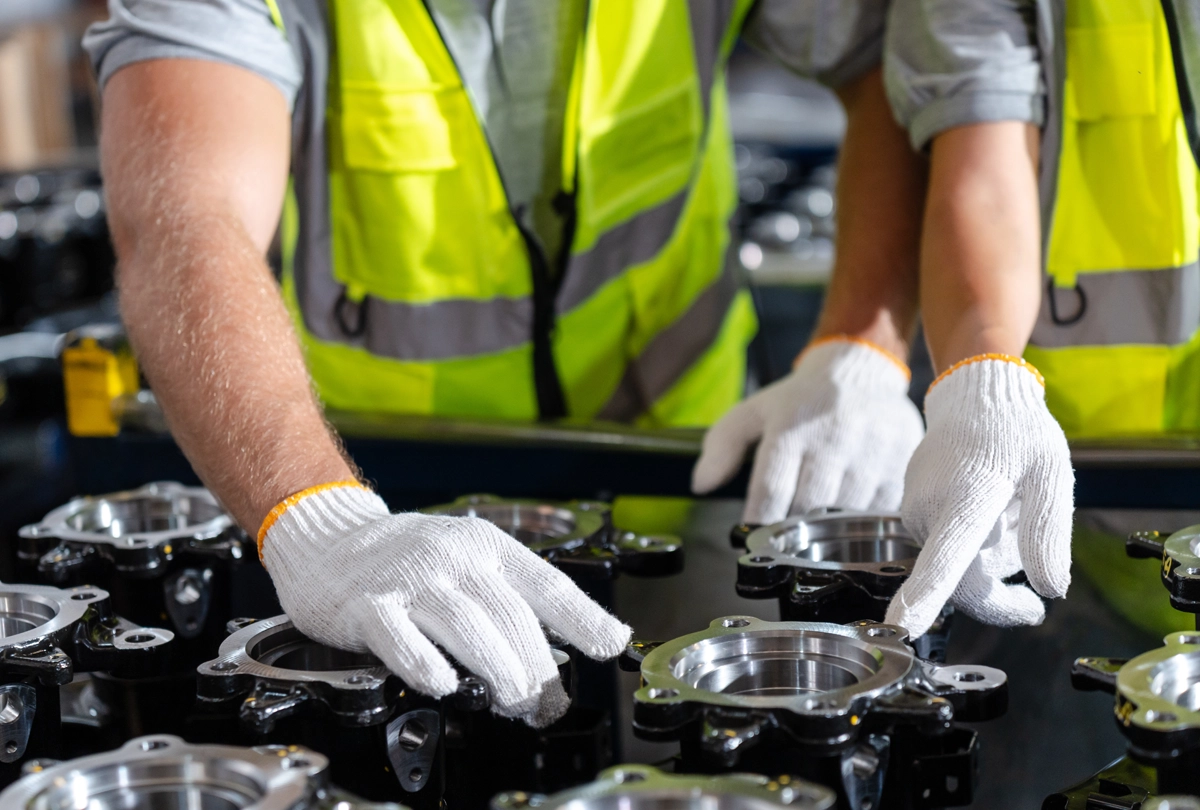
China Plus One is a second production base, not a plan to leave China. Boards that treat it as an exit usually find out, after the deposit is paid, that the China plant was doing work the second country cannot yet do. Tooling, component depth, and the ability to change a specification in weeks rather than a season do not travel with a purchase order.
The useful version of the strategy is narrower. Keep the China operation. Add at least one other source or plant so a shock in a single country does not stop the line. Then decide, on purpose, what the China company still manufactures, buys, and employs people to do.
What the Strategy Is, and What It Is Not
China Plus One, sometimes written C+1, is a supply chain choice. You continue to source or manufacture in China, and you add capacity in at least one other country. The second site can be a contract manufacturer, an owned plant, or a mix. Some groups later add a third country. The name matters less than the rule: China stays in the network while a second base is built beside it.
That is different from closing a factory and hoping a new supplier in another country can absorb the volume. It is also different from a unit-price comparison. A quote that looks cheaper at the factory gate can lose that advantage once freight, duty, inspection, and rework are included. For a smaller company, the practical move is usually a phased add-on on a few product lines, not a relocation of the whole range.
Two misconceptions show up early. The first is that a second country replaces China’s industrial depth. It does not. China is still the place where many of those new plants buy components, molds, and subassemblies. The second is that diversifying production is a reason to unwind the China company on day one. The WFOE, its business scope, and the IP it holds are part of the model you are trying to make more resilient. Dismantling them is a separate project, with its own tax, employment, and contract costs.
Why Boards Are Looking at It Again
The idea is not new. Companies started talking seriously about a “plus one” country around 2013, after years of rising factory wages in coastal China and a growing sense that too much of the world’s manufacturing sat in one place. What changed later was the stack of reasons, not the basic logic.
Disruption made the concentration visible. A port closure, a local lockdown, or a policy shock in one country can idle a product line that has no second source. Trade policy then made origin a board topic. Duties, and the risk that duties move again, change the landed cost of a Chinese shipment even when the factory price has not moved. Some importers also face rules that treat forced-labor exposure as a border and reputation problem, which pushes them to know exactly where a product, and its inputs, were made.
Labor cost still matters, but it is no longer the whole argument. Other countries can be cheaper for some tasks. They are rarely cheaper for every task, and they are rarely as deep in suppliers. The companies that get this right are not chasing the lowest wage. They are reducing the chance that one country can stop the business.
Why China Remains the Core Plant
China remains one of the strongest manufacturing locations in the world. Its infrastructure, supplier density, and industrial range have not been copied elsewhere at a comparable scale. For a large share of foreign manufacturers, the question is still how to stay there in a form that can sit beside a second plant, not whether to abandon the site.
That shows up in how “plus one” factories actually run. A Vietnam or India line often still depends on Chinese tooling, electronics, packaging, or chemical inputs. Mexico can be the right answer for heavy or time-sensitive goods headed to North America, and it can still rely on Asian components. If those inputs are the bottleneck, moving final assembly does not remove China from the critical path. It changes where the risk sits.
There is a corporate consequence. If China keeps making the hard parts, the China entity is not a legacy cost center waiting to be closed. It is a supplier, a quality office, a trading company, or the plant that still runs the SKUs you have not moved. Each of those roles needs a business scope, contracts, and a tax position that match the work. A manufacturing WFOE whose license only describes the old factory model will struggle the moment it starts selling components to your new plant or invoicing a regional headquarters for oversight.
Choosing which of those roles the China company should still play is a market entry decision. Acadia maps the license, funding, and staffing for that role before volume moves.
For the structural choices that belong at incorporation, see China manufacturing setup: entity type, scope, capital, and who owns the IP.
How to Choose the Plus-One Country
There is no ranking that fits every product. A country that works for sewn goods can be the wrong place for precision metal, and a hub that is fast to the United States can be slow and expensive for customers in Europe. Start from the SKU, the end market, and the failure you are trying to avoid. Then test the candidate against five questions.
Cost, including the rules around it. Compare landed cost, not the ex-works price. Local tax, incentives, and the cost of qualifying a new supplier all belong in the first pass. A tax holiday that you cannot use because your process does not qualify is not a saving.
Political and trade risk in the market you actually sell to. Stability in the producing country matters. So does the duty between that country and your customer. A second plant that faces the same tariff problem as China has not diversified the exposure you cared about.
Ports, roads, and time. China is hard to match on logistics. Ask whether the alternative has reliable ports, inland transport, and power, and how long a box takes to reach your warehouse. Proximity to your customers is an advantage only if the freight mode you will really use is fast enough for the product.
Whether a supplier can be trusted with the volume. Financial health, quality history, and the ability to keep running when something breaks are the diligence items. A low quote from a factory that cannot fund materials is not a second source. It is a future stockout.
Whether the workforce can make this product. Skill matters more than headcount. Electronics assembly, garment sewing, and machined parts do not draw on the same labor pool. If the country cannot staff the process, the wage gap is irrelevant.
These are examples, not a ranking. Pick one country for the SKUs being moved.
| Country | Where it tends to fit | What the route buys you | What usually undoes it |
|---|---|---|---|
| Vietnam | Labor-heavy consumer goods and assembly near southern China | Components can still move down from China | A Chinese bill of materials: the factory is new, the origin often is not |
| India | Categories with local material, including cotton textiles and some metal parts | Scale, with export lanes that still depend on the haul to the port | Plant-to-plant variation, and a factory-gate saving that inland logistics erase |
| Mexico | Heavy, bulky, or time-sensitive goods for North America | Road freight measured in days, only if the product qualifies under the relevant trade agreement | Assembling imported kits, which often does not change origin |
| Thailand | Automotive, electronics, and food processing where a supplier cluster already exists | A second Asian base for those processes, aimed at Asia and Europe rather than a United States nearshore play | Treating it as a cheaper Vietnam. The case is the cluster, not the wage |
| Malaysia | Higher-skill electronics, semiconductors, and medical devices | Mature ports and a smaller, specialized workforce | Using it for high-volume basic assembly that the labor pool is not built to staff |
| Indonesia | Footwear, garments, and resource-linked goods, plus a large home market | Java export ports, and capacity that is real only on the industrial corridors you can actually book | Scattered plants and a long qualification. Scale on a map is not a second source |
Do not open three of these at once to look diversified.
Where Execution Goes Wrong
The strategy fails in operations more often than in the country shortlist.
Upfront cost. Finding suppliers, auditing them, running samples, and holding inventory in two places costs money before it saves any. Companies that skip the qualification because a broker has “a factory ready” pay for it in rework.
Quality. Two origins means two process controls. The specification, the approved materials, and the inspection standard have to be the same document in both places. If they are not, you will spend the first year arguing about whose defect it is.
Dual running. Parallel production is the point of the strategy, not a temporary inconvenience. Plan it as one supply chain with two origins: aligned lead times, clear Incoterms, and a rule for which SKUs stay in China. A dual-running period with no end, and no owner, quietly becomes two half-managed supply chains.
The China network has to stay coherent through that period. Supply chain consulting covers which suppliers remain, how they are checked before a large commitment, and how sourcing, compliance, and financial control stay aligned when goods, molds, or services move to a related plant.
Origin. This is the mistake that undoes the tariff maths. Putting a “Made in” label on a product that was substantially made in China does not change its origin. Simple assembly of Chinese parts in Vietnam or Mexico often fails the test that customs and trade agreements actually apply. If the reason for the second plant is duty, get a ruling on the real bill of materials before you commit volume. If the reason is resilience, be honest that Chinese inputs may still be the single point of failure.
Smaller companies feel this more sharply. A second factory’s minimum order can force you to move more volume than the pilot deserves. Start with the product lines that have the most single-country exposure, not with the whole catalogue.
What Changes Inside the China Company
A second plant is a corporate change, not only a purchasing change.
Business scope. If the China entity will sell components to the new plant, buy finished goods for resale, or charge a group company for quality and engineering support, the scope on the business license has to say so. A scope written only for the original factory will block the invoices you need the moment the model changes. Amending scope is possible. It is slower than writing the likely activities in at the start, or amending before the first related-party shipment.
Acadia handles that through company registration when there is no entity yet, usually a WFOE, or through a scope amendment when there is. Chops, tax registration, and banking are lined up so the new flows can be invoiced. If the footprint itself has to change (a line closure, or a shift from manufacturing to trading or oversight), the filings are sequenced so operations continue while the paperwork catches up.
Transfer pricing and invoicing. Goods, molds, and services moving between the China company and a related plant, or between China and the headquarters that owns the new supplier contract, are related-party transactions. Price them as if the parties were independent, and keep the paperwork. A “cost plus a round number” that nobody can explain will not survive a tax query, in China or in the other country.
Acadia’s accounting and tax teams keep the monthly books, VAT invoices, and the transfer pricing support aligned with those flows, including the rules that apply when money leaves China.
Employment. Moving volume out of a China plant reduces work. It does not, by itself, reduce headcount. Terminating staff, changing roles, or closing a line is a labor-law process: grounds, consultation, notice, and severance. Treat that as its own workstream with a timeline. Do not assume the purchasing team can announce a supplier shift and have HR catch up.
Acadia runs that workstream: employment contracts, the handbook, severance, and an employer-of-record arrangement where you need people in China before the entity can hire them directly.
IP and tooling. Molds, drawings, and process know-how are often the most valuable thing you place with a new factory. Own them in the foreign group, or in the China entity if that is where the engineering sits, and license them to the manufacturer. Do not let tooling ownership drift into a supplier’s books because that supplier paid the toolmaker and invoiced you later. The same rule applies inside China. If you already have a joint venture, do not assign core IP into the JV simply because the second-country plan feels easier with a local partner “handling production.”
Contracts. The China entity’s customer and supplier contracts may assume it is the manufacturer of record. If finished goods will now ship from another country, update who delivers, who carries product liability, and which entity invoices. A contract that still names the WFOE as the sole source will fight the supply chain you just built.
A Sequence If You Already Have a China Operation
You do not need a new theory of globalization. You need an order of work.
- List the SKUs that would stop if China stopped, and mark the ones whose duty or customer risk is highest.
- Shortlist one country against those SKUs. Cost, freight time, workforce, and origin rules are the filter. A country ranking from a newsletter is not.
- Qualify a supplier or a site: financials, quality system, capacity, and who owns the tools.
- Run a pilot in parallel with the China line. Do not cut the China volume until the second line has shipped acceptable goods more than once.
- Rebuild the landed-cost and origin comparison on actual shipments, not on the first quotation.
- Decide what the China company still does: the remaining SKUs, components for the new plant, engineering, or trading. Align business scope, transfer pricing, and contracts with that decision.
- Only then change headcount, and only through a documented employment process.
That order keeps the China company useful while the second base proves itself. Reversing it, by deregistering, terminating, or rewriting the license before the pilot works, is how a diversification project becomes a restructuring project. When the commercial decision is forming and the China company has not been redesigned to match it, the useful first step is a short review with Acadia of entity role, scope, related-party pricing, and employment exposure, before a lease, a supplier deposit, or a redundancy plan makes those choices expensive to undo.
Keep the China Structure Able to Sit Beside a Second Plant
China Plus One works when China remains a deliberate part of the network. The second country reduces the chance that one place can stop you. It does not remove the need for a China entity whose scope, capital, IP, and employment arrangements match the work that entity will actually perform.
The companies that handle this well do not start with a deregistration timeline. They start with the product lines that are too concentrated, prove a second source, and then fit the China company to the role it still has. That is a market-entry and corporate question as much as a sourcing question. Getting the structure right is what leaves you able to add a plant without taking the first one apart.
Related services
- China Market Entry Advisory
Our market entry advisory helps companies choose a market, method for incorporation, business model, funding structure, and supply chain structure that meets the needs of their local and regional operations.
- China Company Registration
Compare WFOE, representative office, and joint venture structures, then register the right foreign-invested entity for your China market entry, licensing, and operating model.